Water damage is one of the most disruptive events a commercial property can experience. Unlike residential incidents, where inconvenience is the primary concern, commercial water damage directly affects revenue, productivity, customer trust, and operational continuity. Whether caused by burst pipes, roof leaks, malfunctioning sprinkler systems, appliance failures, or severe weather, water intrusion can halt operations within hours. For business owners and property managers, the primary objective is not only restoring the building but also minimizing downtime and business interruption. Professional commercial Water Damage Restoration Salt Lake City plays a critical role in achieving that goal.
When water enters a commercial facility, the damage extends far beyond visible puddles on the floor. Office equipment, inventory, electrical systems, structural components, and interior finishes are all at risk. Moisture migrates quickly through porous materials such as drywall, insulation, carpeting, and wood framing. Within a short period, trapped moisture can compromise structural integrity and create an environment conducive to mold growth. Without immediate and strategic intervention, what begins as a localized issue can escalate into a large-scale operational crisis.
The financial impact of downtime is often more severe than the cost of physical repairs. Lost sales, halted production, missed deadlines, and displaced employees can significantly affect profitability. In industries that rely on continuous service—such as retail, healthcare, hospitality, or manufacturing—even a brief closure can damage customer relationships and brand reputation. This is why commercial water damage restoration focuses not only on drying and cleanup but also on business continuity planning.
Rapid response is the foundation of minimizing downtime. Time is a critical factor in water damage scenarios. The longer moisture remains in contact with building materials and equipment, the more extensive the damage becomes. Professional restoration teams prioritize emergency response, arriving with specialized equipment to assess, extract, and stabilize the environment. Early intervention limits structural damage, reduces repair scope, and accelerates the timeline for reopening.
The initial assessment stage is particularly important in commercial settings. Restoration professionals conduct a comprehensive inspection using moisture meters, thermal imaging devices, and humidity monitoring tools. This process identifies both visible and hidden moisture. By accurately mapping the extent of water intrusion, restoration teams can develop a targeted action plan. Instead of shutting down entire facilities unnecessarily, they can isolate affected zones and focus resources where they are needed most.
Water extraction is typically the first active step in the restoration process. Industrial-grade pumps and extraction units remove standing water quickly and efficiently. In large commercial properties, this may involve substantial volumes of water. Swift extraction reduces saturation levels and prevents further migration into adjacent spaces. It also sets the stage for structural drying, which is essential for long-term stability.
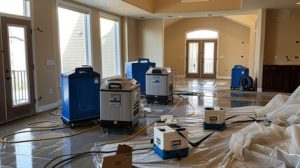
Structural drying in commercial water damage restoration involves a coordinated use of air movers, dehumidifiers, and environmental controls. High-capacity equipment is strategically positioned to create optimal airflow and humidity conditions. The goal is to accelerate evaporation while preventing secondary damage. Commercial-grade dehumidifiers remove moisture from the air, ensuring that evaporation can continue effectively. Continuous monitoring allows technicians to adjust equipment placement and maintain ideal drying conditions throughout the process.
To minimize business interruption, restoration professionals often implement phased restoration strategies. Instead of closing the entire facility, they divide the space into manageable sections. This approach allows unaffected areas to remain operational while restoration work continues in designated zones. Containment barriers and negative air systems may be used to prevent moisture or contaminants from spreading. By maintaining partial operations, businesses can reduce revenue loss and maintain a degree of normalcy.
Several key strategies help reduce downtime during commercial water damage restoration:
- Immediate mitigation to stop the source of water and begin extraction without delay.
- Strategic containment to isolate affected areas and keep unaffected zones operational.
- Coordinated scheduling to align restoration work with business hours when possible.
These measures collectively protect operational continuity while addressing structural concerns.
Another crucial component of commercial restoration is protecting critical assets. Businesses often rely on sensitive equipment, digital infrastructure, and inventory that may be vulnerable to moisture. Restoration teams prioritize safeguarding electronics, machinery, and documents. In some cases, equipment may need to be relocated temporarily to a dry environment. Data centers and specialized facilities may require climate-controlled conditions throughout the restoration process. Preserving these assets reduces replacement costs and supports faster operational recovery.
Mold prevention is also a high priority in commercial settings. Excess moisture can lead to microbial growth if not addressed promptly. Mold contamination not only damages materials but can also raise health concerns for employees and customers. Addressing moisture thoroughly during the drying phase minimizes the risk of future remediation projects. By preventing mold growth, businesses avoid additional closures and reputational risks.
Insurance coordination is another area where professional restoration services provide value. Commercial claims often involve detailed documentation requirements. Restoration teams document moisture readings, damage assessments, equipment usage, and progress reports. This thorough record-keeping supports smoother claims processing and ensures transparency. Accurate documentation helps businesses recover financially while focusing on operational recovery.
Effective communication during restoration is critical for minimizing disruption. Business owners, property managers, and restoration teams must collaborate to prioritize areas of concern and establish realistic timelines. Clear communication ensures that safety protocols are followed and that employees understand which areas are accessible. When staff are informed and operations are strategically managed, productivity losses can be significantly reduced.
Commercial water damage restoration also addresses long-term structural protection. Moisture trapped behind walls or beneath flooring can weaken materials over time. If left untreated, this hidden damage may result in costly repairs months or years later. Professional drying and inspection ensure that the building returns to acceptable moisture levels before reconstruction begins. This comprehensive approach protects the investment in the property and prevents recurring issues.
Business interruption planning should not begin after water damage occurs. Proactive property managers incorporate water damage response plans into their risk management strategies. These plans outline emergency contacts, shut-off procedures, and communication protocols. When a plan is in place, response times are shorter and confusion is minimized. Professional restoration partners often assist businesses in developing these preparedness strategies, strengthening resilience against future incidents.
The long-term benefits of commercial water damage restoration extend beyond immediate cleanup. They include:
- Reduced repair costs through rapid mitigation and targeted drying.
- Preservation of structural integrity and mechanical systems.
- Faster return to normal operations, protecting revenue streams and customer confidence.
These outcomes demonstrate why professional restoration is an essential investment rather than an optional expense.
In some industries, regulatory compliance adds another layer of complexity. Facilities must meet health and safety standards before reopening. Proper sanitation, moisture control, and environmental testing may be required. Professional restoration teams understand these standards and ensure that cleanup efforts align with regulatory expectations. This attention to compliance prevents delays and protects the business from potential penalties.
Reconstruction may follow the drying and mitigation phase if materials are beyond salvage. In commercial environments, reconstruction timelines are carefully coordinated to minimize operational impact. Scheduling work during off-hours or in stages allows businesses to resume operations as quickly as possible. Efficient project management during reconstruction further reduces downtime.
Employee morale and customer trust are often overlooked factors in disaster recovery. A swift, organized response demonstrates leadership and commitment to safety. When employees see proactive measures in place, confidence in the organization is reinforced. Customers and clients are more likely to remain loyal when disruptions are handled professionally and transparently. Commercial water damage restoration therefore contributes not only to physical recovery but also to brand stability.
In conclusion, commercial water damage restoration is about far more than drying floors and repairing walls. It is a strategic process designed to minimize downtime, protect revenue, and preserve long-term property value. Through rapid response, advanced structural drying techniques, containment strategies, and coordinated communication, professional restoration services help businesses navigate crises with resilience. By prioritizing both structural integrity and operational continuity, commercial water damage restoration safeguards one of a company’s most valuable assets: its ability to function. For business owners and property managers, investing in professional restoration services is a decisive step toward protecting their investment and ensuring sustained success even in the face of unexpected challenges.